
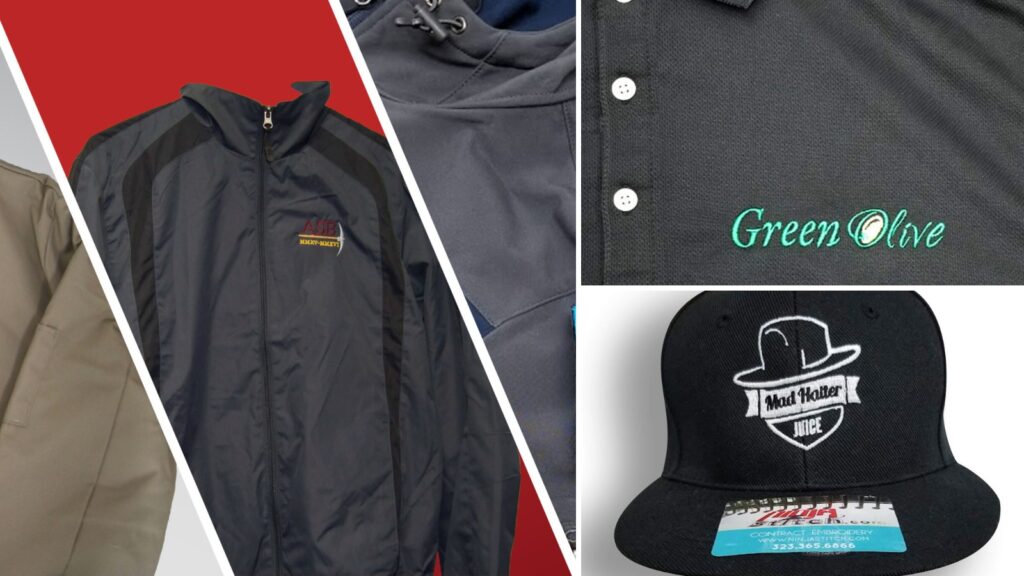
Technology made it easier for shops to offer services like screen printing and embroidery in Los Angeles. While there are many advantages to screen printing, embroidery remains a timeless and highly popular means of customizing clothing for your business. Custom embroidered clothing looks polished, holds up to years of wear and works on far more than t-shirts. Here are some of its benefits:
3 Advantages of Custom Embroidered Clothing
- Reinforces your business’s identity
Many businesses today whether corporate or retail often prefer embroidered clothing for their employees’ uniform due to its clean and professional look ideal for spreading the company name. However, it’s not limited to your staff’s uniform. It can be used for promotional products or giveaways too. Clients and employees alike who wear clothing with your company’s logo help reinforce your company’s identity and associate the imagery with your products or services as well. Selling your own apparel line? See why embroidery is worth it for clothing labels.
- Added variety in color and style
The great thing about embroidery is that it’s not limited to t-shirts. A reputable shop that offers fast embroidery in Los Angeles can easily embroider a large variety of items – from backpacks, jeans, jackets, and even yoga pants! Moreover, advancement in embroidery also enables a limitless selection of styles and colors that can surely capture your audience’s eyes. Even shoes can be embroidered; here are some ideas for stitching designs on sneakers.
- Durability of materials
Embroidery is widely known due to its durability. A Los Angeles embroidery shop can add your custom design or logo to an article of clothing, and it will remain intact for many years. Embroidery easily outlasts screen printing methods, which can fade with age and frequent washing.
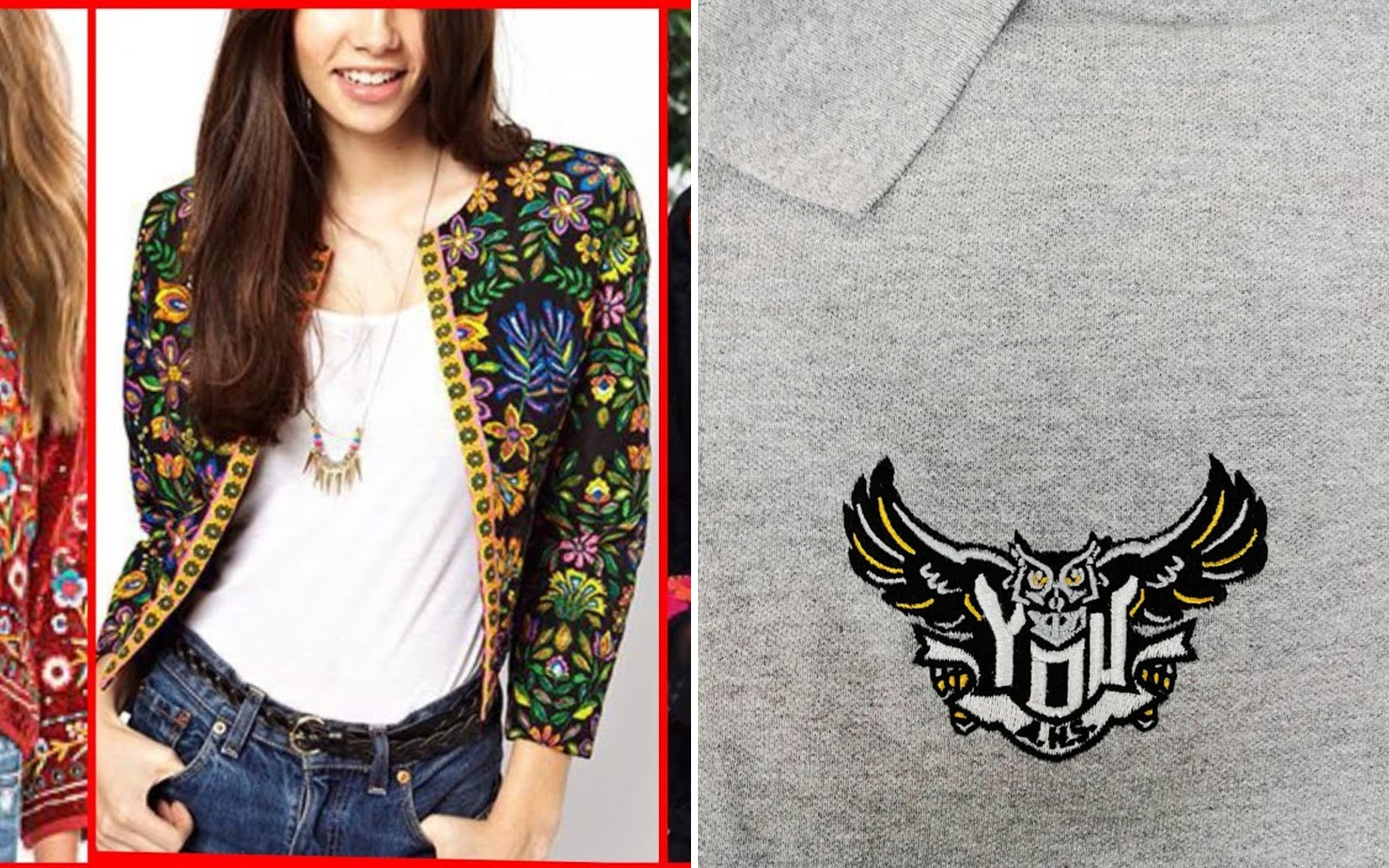
Embroidery Styles to Consider
Custom embroidered clothing isn’t one-size-fits-all. The stitching style you choose changes the whole look of a garment:
- Flat embroidery: the classic, low-profile finish for logos and lettering on polos, shirts and jackets.
- 3D puff embroidery: foam under the stitches raises the design for a bold, dimensional look that is a favorite on caps and snapbacks.
- Appliqué: a fabric shape stitched onto the garment, which covers large areas without a heavy, dense stitch count.
- Tone-on-tone: thread that closely matches the garment color for a subtle, upscale effect.
- Contrast stitching: bright thread on a dark garment, or dark thread on a light one, for maximum visibility from a distance.
Not sure which style fits your design? Our team can recommend one when you request a quote.
Fabrics That Take Embroidery Best
Embroidery looks its best on fabrics with enough weight and structure to support the stitches. Some reliable choices:
- Cotton piqué and blends: the classic polo fabric holds a left-chest logo neatly and stands up to regular washing, which is why embroidered polos are a uniform staple.
- Twill and canvas: used for caps, work shirts, aprons and bags, and sturdy enough for dense, detailed designs.
- Fleece and sweatshirt knits: soft but thick, ideal for hoodies and crewnecks with larger chest designs.
- Denim: a favorite for embroidered jackets and jeans, especially with contrasting thread.
- Performance and stretch fabrics: thin, stretchy knits can be embroidered with the right backing, but smaller, lighter designs work best.
What Makes Embroidery Last
Not all embroidery holds up equally. Three details separate stitching that lasts for years from stitching that frays early:
- Thread quality: polyester embroidery thread resists fading and holds its color through frequent washing, which makes it a common choice for workwear.
- Backing: a stabilizer behind the design keeps the fabric from shifting while it is stitched, so the logo stays flat and crisp.
- Digitizing: a well-built stitch file uses the right density and underlay for each fabric, which prevents gaps, puckers and loose threads. Learn more about converting your logo into embroidery.
How to Care for Embroidered Clothing
A little care keeps embroidered designs looking new for years:
- Wash inside out: turn garments inside out and use cold or warm water on a gentle cycle.
- Skip the bleach: avoid bleach and harsh stain removers on the stitched area.
- Dry gently: tumble dry on low or hang to dry to prevent shrinking around the design.
- Iron from the back: press the reverse side with a cloth between the iron and the fabric, never directly on the stitches.
- Store with care: hang jackets and fold shirts so the design isn’t crushed under heavy items.
Embroidery and DTF: Using Each Where It Shines
Embroidery is the premium choice for polos, caps and jackets, but some clothing is better printed. For lightweight tees, stretchy athletic wear or artwork with photographic detail and gradients, full-color DTF transfers bond a vibrant, soft-touch print to cotton, polyester and blends. Many brands embroider their outerwear and headwear and use DTF for tees and event shirts, so every piece gets the method that suits it best.
Custom Embroidered Clothing FAQs
Will embroidery pucker after washing?
Well-made embroidery shouldn’t. Puckering usually comes from a design that’s too dense for the fabric or from missing backing, which is why digitizing and stabilizers matter.
Can you embroider stretchy fabrics like yoga pants?
Yes, with the right stabilizer and a design sized for the fabric. Smaller, lighter designs keep stretch garments comfortable and flexible.
Does embroidery feel stiff or heavy?
A left-chest logo adds very little weight. Large, dense designs feel more substantial, so on lightweight garments it’s worth keeping the design smaller or choosing a print.
How long does embroidered clothing last?
With proper care, embroidery often lasts as long as the garment itself. The thread won’t crack or peel, and quality polyester thread keeps its color wash after wash.
Can embroidery be removed later?
It’s possible, but removing stitches usually leaves needle holes in the fabric. That’s why it pays to review your digital proof carefully before production starts.
Interested in learning more about custom embroidered clothing and our services? Request a quote from Ninja Stitch and our team will help you choose the right garments and fabrics. NINJA Stitch is a leading business specializing in quality screen printing and embroidery services, and we serve areas within 100 miles from zip code 90014.
Related reading: