
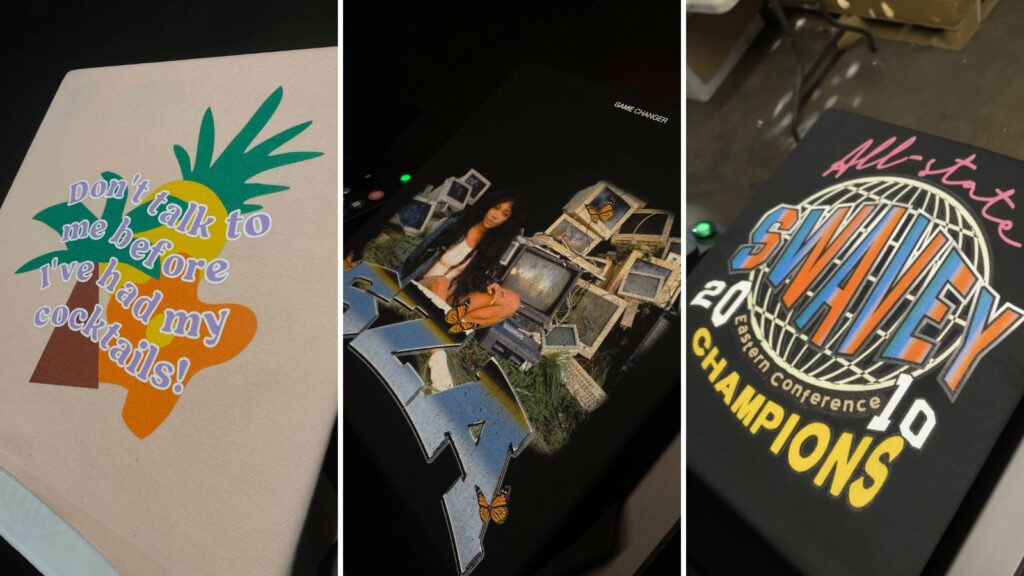
With several, quality methods available to create impressive, custom apparel garments, direct-to-garment (DTG) printing is a newer technique gaining recognition among printers in the industry. Direct-to-garment printing is a process by which a digital image is printed directly onto your apparel using cutting edge printing technology and inks. This process allows us to print highly detailed, full-color designs at an affordable price, especially on short runs. If you have been looking to find information about some of the benefits of DTG printing, then you have come to the right place at Ninja Stitch. For the highest quality direct to garment printing services, consider Ninja Stitch in Los Angeles, California today. Let’s take a look at some of the benefits of direct to garment printing.
Learn more about our process for high-end printing services at Ninja Stitch.
Vibrant and High-Quality Designs
Compared to traditional printing methods, DTG printers can create lively, photo-realistic images by firing smaller droplets of ink, allowing for more detail. These printers also use the full spectrum of colors, with the ability to print them simultaneously, making them perfect for colorful designs or artwork with shading and gradients.
Get On-Demand Printing
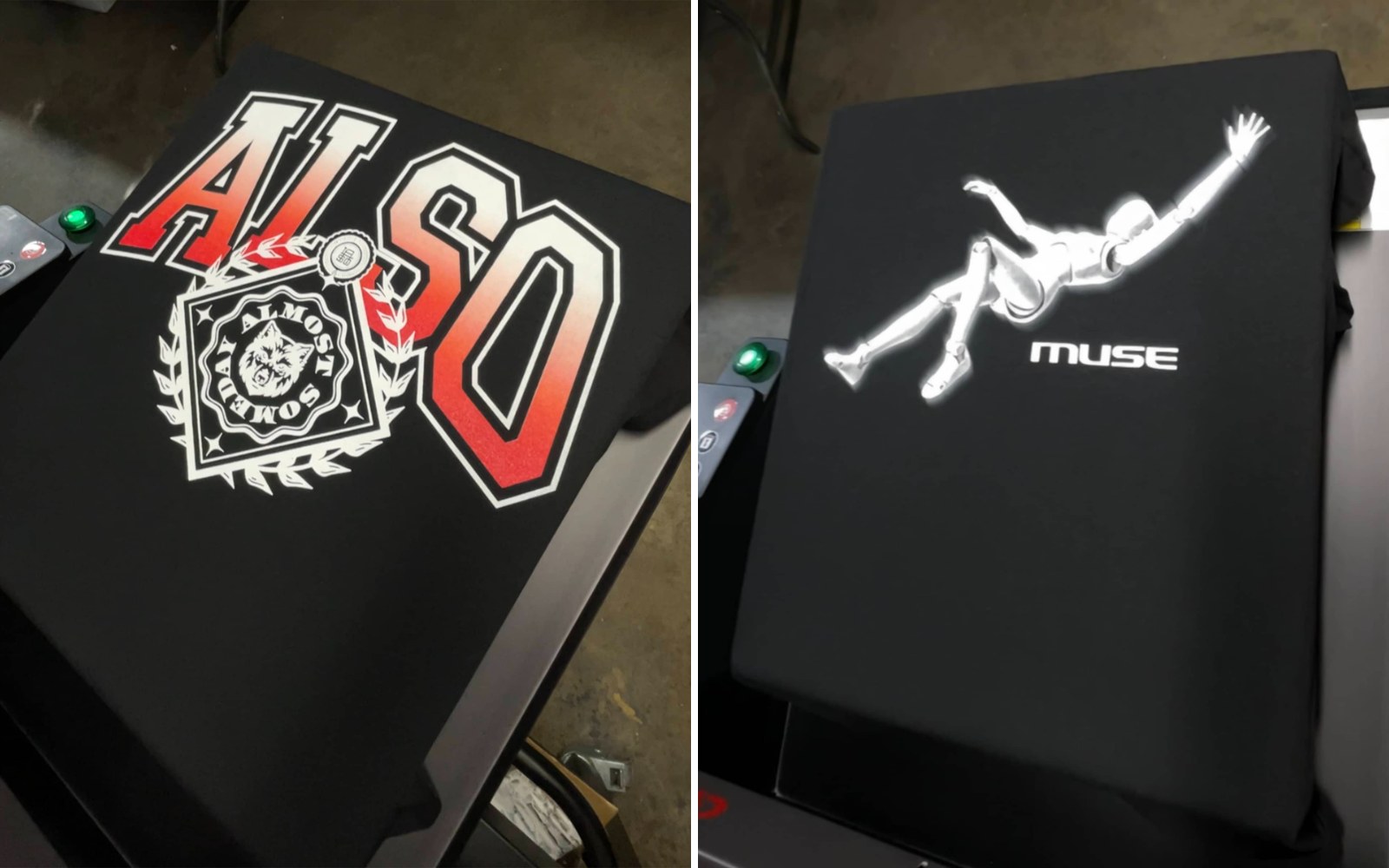
Unlike screenprinting, which requires a lot of setup and squeegeeing each color of ink separately, DTG printing entails little-to-no setup and can avail a multicolor design at the press of a button. With barely any time-consuming manual labor involved, small-batch custom orders can move quickly, which is perfect for customers who are in a time crunch and need a fast turnaround for their garments.
A Simple and Streamlined Process
To create a flawless, custom, apparel DTG print, there are really just four simple steps: pretreat and cure the garment, load the digital art to your graphics system and adjust your design’s layout as desired, put the garment on the platen and print, then use a heat press and cure one last time. Our team of ninjas has mastered the art of direct to garment printing, and we can handle jobs of any size! Here’s a look at what our Los Angeles shop prints with DTG, from custom tees to merch and gifts.
More Benefits of DTG Printing
- A soft feel: the ink soaks into the fibers instead of sitting on top, so prints feel smooth and breathable, especially on cotton.
- Unlimited colors: there are no screens to make, so a full-color design doesn’t cost more to set up than a one-color logo.
- Easy personalization: each garment is printed individually, so names, numbers or photos can change from shirt to shirt.
- Great for samples: test a new design or show a client a finished piece before you commit to a larger run.
- Fine detail: thin lines, small text and subtle shading come through clearly.
- Print only what you need: short runs keep you from paying for extra inventory you don’t want.
Together, these benefits make DTG a favorite for artists, small brands and anyone who wants a detailed design on just a few shirts. It’s also a natural fit for launching an original K-pop clothing line.
How to Get the Best DTG Results
A great DTG print starts with the right file and the right garment:
- Use high-resolution artwork: a PNG at 300 DPI at the size you want printed keeps details sharp.
- Choose a transparent background: otherwise, the printer may print the background box onto the shirt.
- Pick cotton garments: DTG performs best on 100% cotton or high-cotton blends, where the ink can soak into natural fibers.
- Expect pretreatment on dark shirts: dark garments are pretreated so a white underbase can keep colors bright and opaque.
- Mind very light colors: pale pastels can look faint on white or light garments, so boost contrast where you can.
- Care for the print: wash inside out in cold water and tumble dry low or hang dry to keep colors vivid.
Is DTG Right for Your Project?
DTG is likely a great fit when:
- Your design is colorful: it has many colors, gradients or photo-like detail.
- You’re printing on cotton: tees and high-cotton blends give the best results.
- Your run is short or varied: you need a few pieces, or each one carries a different name or design.
- You want a sample first: you’d like to see a finished piece before committing to a bigger order.
- Feel matters: you want a soft print that feels like part of the shirt.
Another method may suit you better if you’re printing a large run of the same simple design, where screen printing usually costs less per shirt, or decorating polyester, hats or bags, where DTF or embroidery is the stronger choice.
DTG vs. DTF: Which Should You Choose?
DTG is hard to beat for soft, photo-quality prints on cotton tees. If your order includes polyester, blends, hats or bags, or you want several designs printed at once, DTF gang sheets are often the better fit: transfers work on cotton, polyester and blends, there are no minimums, and orders in by 1 PM can be printed the same day. You can also keep DTF transfers on hand and press them whenever you need them. Our DTF vs. DTG vs. screen printing guide breaks down the differences.
DTG Printing FAQs
Does DTG printing work on polyester?
DTG is designed for natural fibers and performs best on cotton. For polyester and performance fabrics, DTF transfers or screen printing with the right inks are usually better options.
Why do DTG prints feel so soft?
DTG inks are typically water-based and soak into the fabric instead of forming a thick layer on top, so the print feels like part of the shirt.
Can DTG print on dark shirts?
Yes. Dark garments are pretreated and printed with a white underbase first, which keeps the colors on top bright and opaque.
Is DTG a good choice for large orders?
It can be, but screen printing usually becomes more cost-effective as quantities grow, especially for designs with only a few colors. DTG shines on short runs, samples and colorful, detailed artwork.
If you are interested in learning more about the benefits of direct to garment printing, then we encourage you to get in touch with a representative at Ninja Stitch in Los Angeles today!
Request a DTG printing quote or speak with a representative.
Related reading: