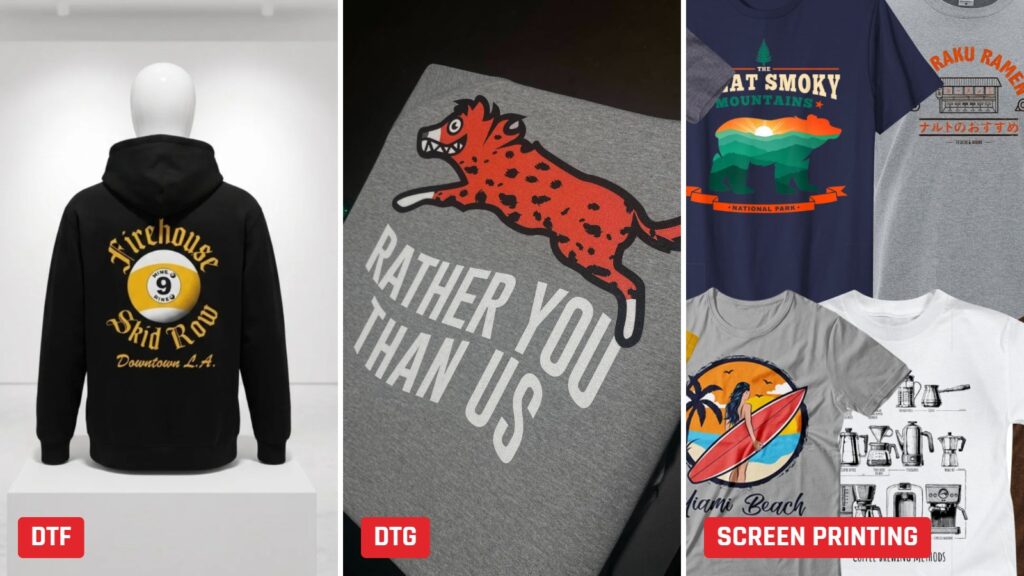
Choosing how to decorate your shirts, hoodies or merch can feel harder than designing them. DTF, DTG and screen printing can all put a great-looking design on a garment, but each method shines in different situations. The right pick depends on your artwork, your fabric, how many pieces you need and how quickly you need them.
Here’s a plain-English breakdown of DTF vs. DTG vs. screen printing from the team at Ninja Stitch in Downtown Los Angeles, so you can order with confidence.
The Short Answer
- Choose DTF for full-color designs, small or mixed runs, and garments made from cotton, polyester or blends.
- Choose DTG for soft, photo-quality prints on cotton tees, especially one-offs and short runs.
- Choose screen printing for larger orders with a few solid colors, where the price per piece drops as quantity goes up.
What Is DTF Printing?
DTF stands for direct-to-film. Your artwork is printed onto a special PET transfer film, first in full color and then with a layer of white ink behind it. An adhesive powder is applied and cured, which turns the print into a ready-to-press transfer. The transfer is then heat pressed onto the garment and the film is peeled away.
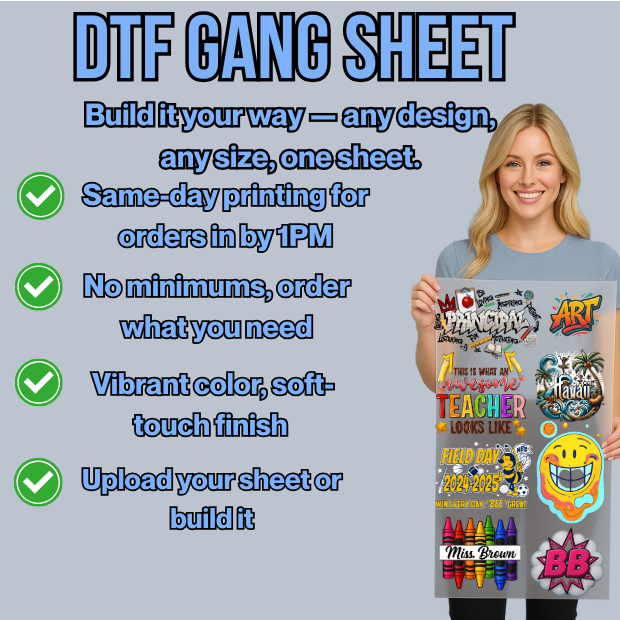
Because the design is printed on film first, DTF isn’t limited to one type of fabric, and you can fit many designs and sizes onto a single gang sheet. Ninja Stitch’s DTF gang sheets print on a 23″ x 36″ sheet with vibrant color and a soft-touch finish. There are no minimums, and orders placed by 1 PM can be printed the same day.
What Is DTG Printing?
DTG, or direct-to-garment printing, works like an inkjet printer for apparel. The printer applies water-based ink straight into the fabric, so there’s no transfer layer and the print feels very soft. DTG is excellent for detailed, photo-realistic artwork on cotton garments and for small orders where setting up screens wouldn’t make sense. It’s less suited to polyester and many synthetic blends. On cotton, though, DTG’s soft feel and fine detail are hard to beat.
What Is Screen Printing?
Screen printing pushes ink through a mesh stencil, called a screen, onto the garment, with a separate screen for each color. Setup takes time up front, but once the screens are ready the press runs quickly, which makes screen printing very cost-effective for larger quantities. It produces bold, durable color and is a favorite for uniforms, events and merch drops with simple, solid-color designs.

DTF vs. DTG vs. Screen Printing at a Glance
| DTF | DTG | Screen Printing | |
|---|---|---|---|
| Best for | Full-color designs, small and mixed runs | Photo-quality prints on cotton, one-offs | Large runs with a few solid colors |
| How it works | Printed on film, then heat pressed | Ink printed directly into the fabric | Ink pushed through one screen per color |
| Color and detail | Unlimited colors, gradients and fine lines | Unlimited colors and fine detail | Best with a limited number of spot colors |
| Fabrics | Cotton, polyester, blends and more | Best on cotton | Cotton, blends and many other fabrics |
| Order size | No minimums at Ninja Stitch | Great for one-offs and short runs | Most cost-effective on larger orders |
| Feel | Soft-touch, flexible print | Very soft; ink sits in the fabric | Durable ink layer you can feel |
How Much Does Each Method Cost?
The cheapest method depends on your order, not just the technique. With screen printing, each color needs its own screen, so setup is spread across the order and the price per shirt drops as quantities grow. DTG has very little setup, which makes it efficient for one-offs and small batches, but every piece takes time on the printer. DTF is priced by the gang sheet, so the more designs and sizes you nest onto one 23″ x 36″ sheet, the more value you get from it.
As a rule of thumb, a large run of a simple design points to screen printing, a handful of photo-quality cotton tees points to DTG, and a colorful design across mixed garments and sizes points to DTF.
When DTF Is the Best Choice
- Your design has lots of colors, gradients or fine detail.
- You need a small quantity, or many different designs and sizes in one order.
- You’re decorating polyester, blends or accessories like totes.
- You want ready-to-press transfers you can apply yourself, whenever you need them.
- You’re on a deadline: gang sheets ordered by 1 PM can be printed the same day.
Planning your artwork? Our step-by-step DTF gang sheet guide explains how to set up a print-ready 23″ x 36″ PNG file at 300 DPI.
When DTG Is the Best Choice
Pick DTG for soft, highly detailed prints on cotton tees, such as photo artwork, one-of-a-kind gifts or a short run of designs for a pop-up. It also works well for building a collection on premium box tees. Learn more in What Is Direct-to-Garment (DTG) Printing?
When Screen Printing Is the Best Choice
Pick screen printing when you’re ordering larger quantities of the same design with a few solid colors, like staff shirts, event tees or team uniforms. The more pieces you print, the lower the cost per shirt. Read more about the benefits of screen printing t-shirts.
Don’t Forget Embroidery
For polos, hats, jackets and workwear, a stitched logo still delivers the most premium, long-lasting look. Ninja Stitch offers custom embroidery alongside DTF, DTG and screen printing, so you can mix decoration styles in one order, such as embroidered polos for staff and DTF-printed tees for customers.
Frequently Asked Questions
Which print method lasts the longest?
Screen printing is known for exceptional durability, and quality DTF transfers also hold up well to repeated washing when they’re pressed correctly. DTG prints stay vibrant with gentle care, such as washing inside out in cold water.
Can DTF transfers go on hats and bags?
DTF works on many fabrics and accessories, including totes and many hats, as long as the item can handle a heat press. For structured caps, embroidery is still the classic choice.
What do I need to apply DTF transfers myself?
A heat press is the best tool for the job. Our guide on how to apply DTF transfers walks through the recommended temperature, time and peel.
Not Sure Which Method Fits Your Project?
Send us your artwork, quantity and garment type, and the Ninja Stitch team will recommend the most cost-effective way to print it. Contact us for a quote, or order DTF gang sheets if you’re ready to press your own transfers.
Related reading: