
DTF transfers make it easy to put full-color designs on shirts, hoodies, totes and more, but the final result depends on how you press them. The right temperature, time and peel give you a print that looks sharp and survives the wash. Rush it, and you risk lifting edges or a transfer that won’t release cleanly from the film.
Here’s how to apply DTF transfers step by step, using the settings Ninja Stitch recommends for its DTF gang sheets.
What You’ll Need
- A heat press. Household irons struggle to deliver the even heat and pressure DTF transfers need, so a heat press gives the most reliable results.
- Your DTF transfers, cut out from your gang sheet with a small margin around each design.
- The garment, clean and dry.
- A protective cover sheet, such as a Teflon sheet or parchment paper.
- Heat-resistant tape (optional) to keep transfers from shifting.
- A lint roller to clear fibers and dust from the print area.
Recommended DTF Heat Press Settings
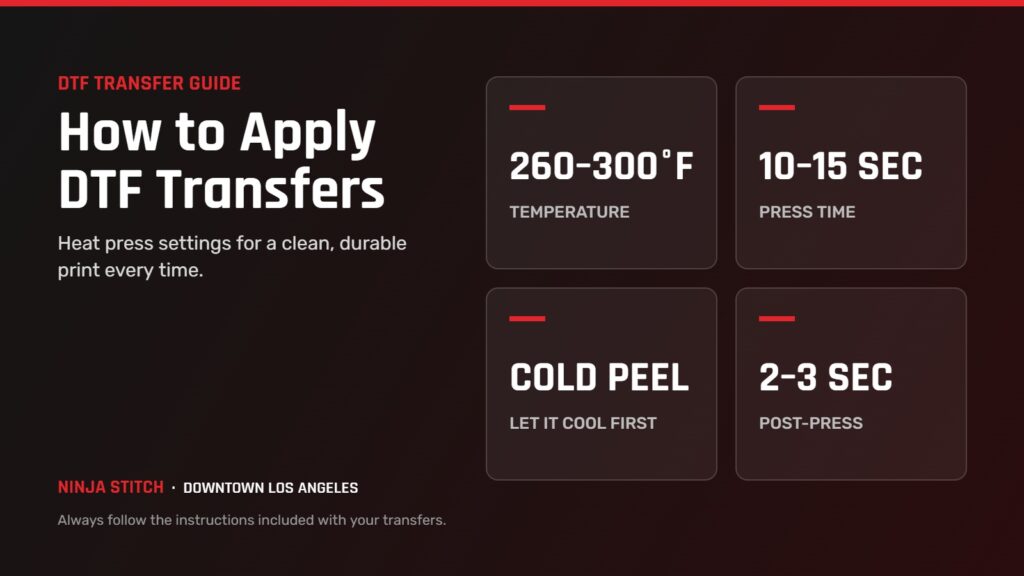
These settings come from Ninja Stitch’s DTF gang sheet printing process:
| Setting | Recommendation |
|---|---|
| Temperature | 260 to 300°F |
| Press time | 10 to 15 seconds |
| Peel | Cold peel: let the transfer cool slightly first |
| Post-press | 2 to 3 seconds |
Use firm, even pressure. Every press runs a little differently, so test on a scrap garment when you can, and always follow any instructions included with your order.
How to Apply DTF Transfers, Step by Step
- Preheat your press to between 260°F and 300°F.
- Prep the garment. Lint roll the print area, then pre-press the garment for a few seconds to remove moisture and wrinkles.
- Position the transfer. Place the transfer adhesive side down on the garment, with the film on top. Use heat-resistant tape if you need to hold it in place.
- Cover and press. Lay your cover sheet over the transfer and press for 10 to 15 seconds.
- Let it cool. DTF transfers use a cold peel, so give the transfer time to cool before you remove the film. Peeling too soon can pull the design off the garment.
- Peel the film. Peel slowly and smoothly at a low angle. If an edge starts to lift, lay the film back down and press again.
- Post-press. Cover the design and press for another 2 to 3 seconds. This final press helps the transfer bond fully and improves its durability and feel.
Where to Place Your Design
Good placement makes a custom shirt look professional. On adult tees and hoodies, these common positions are a solid starting point:
- Left chest: a logo about 3 to 4 inches wide, centered over the left chest.
- Full front: center the design about 3 to 4 inches below the collar.
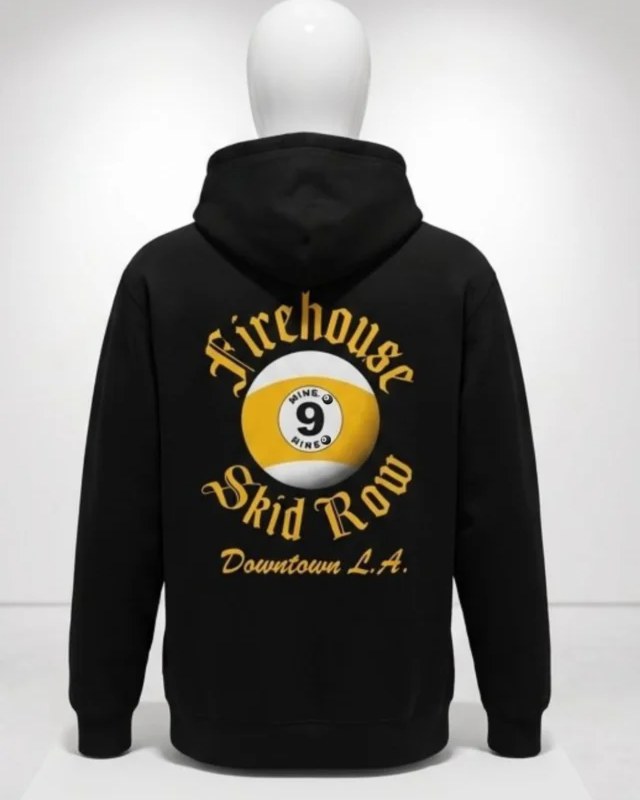
- Full back: center the design about 4 to 5 inches below the back collar.
- Sleeve: center a 2.5 to 3.5 inch design on the upper sleeve.
- Hats and bags: use a smaller design, and for hats, a press or attachment made for curved surfaces.
To keep placement consistent across a whole order, fold each shirt in half to find the center line or use a T-square or alignment ruler. Pressing names onto hoodies for a party? Here are some tips for planning custom bar mitzvah hoodies.
Can You Use an Iron Instead of a Heat Press?
A heat press is the recommended tool because it holds a steady temperature and applies even pressure across the entire design. A household iron has hot and cool spots and relies on hand pressure, which can leave parts of the transfer under-bonded. If you’re pressing more than a few pieces, or you want prints that last through many washes, a heat press is well worth it.
DTF Transfers vs. Other Heat Transfers
DTF isn’t the only heat-applied decoration, but it has a few clear advantages. Unlike heat transfer vinyl, DTF doesn’t require weeding, and a single transfer can reproduce full-color artwork, gradients and fine detail. Unlike sublimation, it isn’t limited to light-colored polyester, so it works on dark cotton tees, hoodies and blends as well. Heat-activated adhesive patches are another option, and our comparison of adhesive patches and DTF transfers shows when each one fits best.
Troubleshooting Common DTF Problems
- The design lifts when you peel. Let it cool longer, then lay the film back down and press again. If it keeps happening, check that your temperature, time and pressure are in range.
- Edges peel after washing. This usually means the transfer didn’t get enough heat or pressure. Don’t skip the post-press, and wait at least 24 hours before the first wash.
- Scorch marks or press lines. Use a cover sheet and stay within the recommended temperature range. A pressing pillow helps on garments with seams, zippers or pockets.
- A doubled or blurry edge. The film likely shifted during pressing. Use heat-resistant tape and avoid sliding the garment while the film is on.
How to Wash and Care for DTF Prints
- Wait at least 24 hours after pressing before the first wash.
- Turn garments inside out and wash in cold or warm water with a mild detergent.
- Skip bleach and fabric softener.
- Tumble dry on low or hang to dry.
- Don’t iron directly on the print. If you need to iron, turn the garment inside out or use a cover sheet.
DTF Transfer FAQs
Can I press DTF transfers on polyester?
Yes. DTF works on polyester and blends as well as cotton. Stay within the recommended temperature range and use a cover sheet, since some synthetic fabrics are more sensitive to heat.
Can I re-press a transfer that didn’t fully stick?
Yes. If an edge lifts during the peel, lay the film back down, cover it and press again for a few seconds before peeling.
How should I store transfers before pressing?
Keep unpressed transfers flat in a cool, dry place away from direct sunlight and humidity, and press them as soon as is practical for the best results.
Ready to Press Your Own Designs?
DTF transfers give you full-color, ready-to-press prints whenever you need them. Ninja Stitch prints DTF gang sheets in Downtown Los Angeles with vibrant color, a soft-touch finish and no minimums, and orders in by 1 PM can be printed the same day.
Setting up your first sheet? Start with our guide to preparing a DTF gang sheet, or see how DTF compares with DTG and screen printing. Prefer to have your garments decorated for you? Contact our team about custom apparel. We also decorate hats and polos with heat press transfers in-house.
Related reading: