
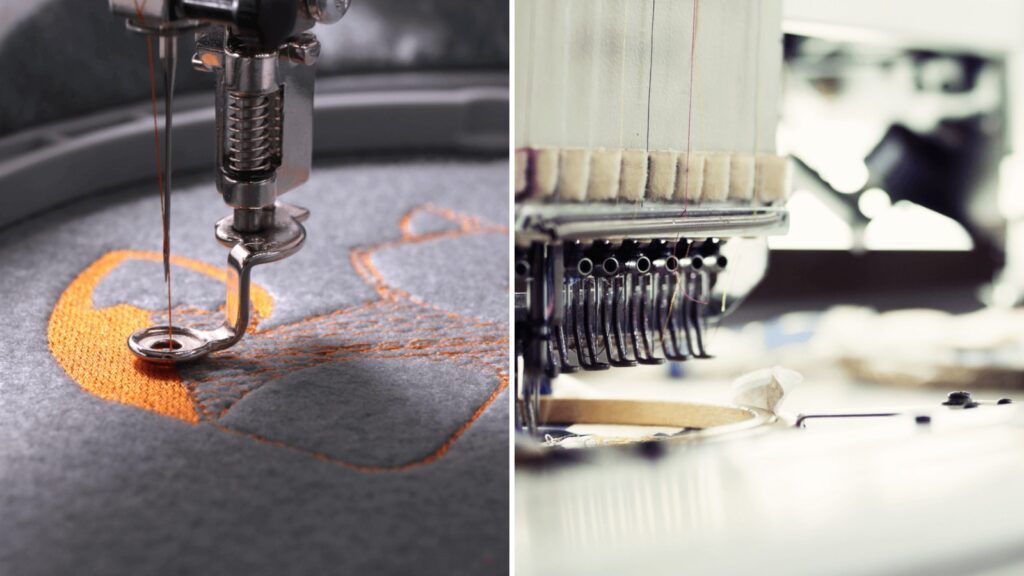
What embroidery stitches does every beginner embroiderer need to know about? There are more than ten of them, but we’ll start you off with the five most basic on the list. These beginner embroidery stitches are easy to learn by hand and form the foundation for almost every design.
Any of these stitches could be your favorite, not only because they’re the easiest to do, but because they are practical and decorative as well. Start laying the foundations of your stitch knowledge today.
You can count on NINJA Stitch for quality Stitches and Embroidery in Los Angeles, California.
5 Basic Embroidery Stitches Every Beginner Should Know
- Backstitch
Let’s start you off with the backstitch, which is perhaps the most useful when it comes to learning embroidery. You’re basically able to make anything using this stitch. You can use it to make monograms, outlines, and simple designs. Plus, not only is the backstitch easy to learn, it’s an amazing confidence booster for any beginner out there. - Straight stitch
Very similar to the backstitch, the straight stitch serves as one of the foundations of embroidery and is arguably the easiest to do. It basically allows you to create flowers, stars, and more simple designs in any direction, from a single stitch. - Seed Stitch
This type of stitch is characterized by a slew of randomly-directed, isolated straight stitches and backstitches that are spaced according to your goal or the design you wish to achieve. This would be the ideal stitch to use for expansive fabrics and garments. You can also create darker patches by sewing stitches more closely or spacing smaller ones farther apart. - Running Stitch
Resembling a dashed line, the running stitch serves as the perfect decorative border. One of the best things about it is that it makes for a great foundation for adding other stitches onto. Running stitches are either small or bigger stitches of equal length, spaced equally apart. - Lazy Daisy or Detached Chain Stitch
You can create a lot of fun designs with this stitch because of its “petal” or “leaf-shaped” attribute. If you plan on giving your designs a floral or botanical touch then the detached chain stitch would be perfect.
Supplies You Need to Start Hand Embroidery
You don’t need much to get started. A basic kit includes:
- Embroidery hoop: a 6-inch hoop is a comfortable size for most beginner projects and keeps your fabric taut.
- Fabric: a tightly woven cotton or linen is the easiest to stitch on.
- Embroidery floss: six-strand cotton floss comes in hundreds of colors and can be separated for finer lines.
- Needles: embroidery (crewel) needles have a larger eye that makes threading floss easier.
- Small, sharp scissors: for clean cuts close to the fabric.
- A thimble (optional): protects your fingertip when pushing the needle through thicker fabrics.
- A water-soluble pen: for marking your design; the lines rinse away when you’re done.
Tips for Your First Embroidery Project
- Start small and simple: a name, a flower or a short word lets you practice each stitch without getting overwhelmed.
- Keep your fabric taut: tighten the hoop until the fabric is drum-tight so your stitches stay even.
- Work with shorter thread: about 18 inches of floss at a time helps prevent tangles and knots.
- Keep stitch length consistent: even stitches look neater, especially with backstitch and running stitch.
- Practice on scraps: try each new stitch on spare fabric before adding it to your project.
- Don’t pull too tight: overly tight stitches pucker the fabric around your design.
Hand Embroidery vs. Machine Embroidery
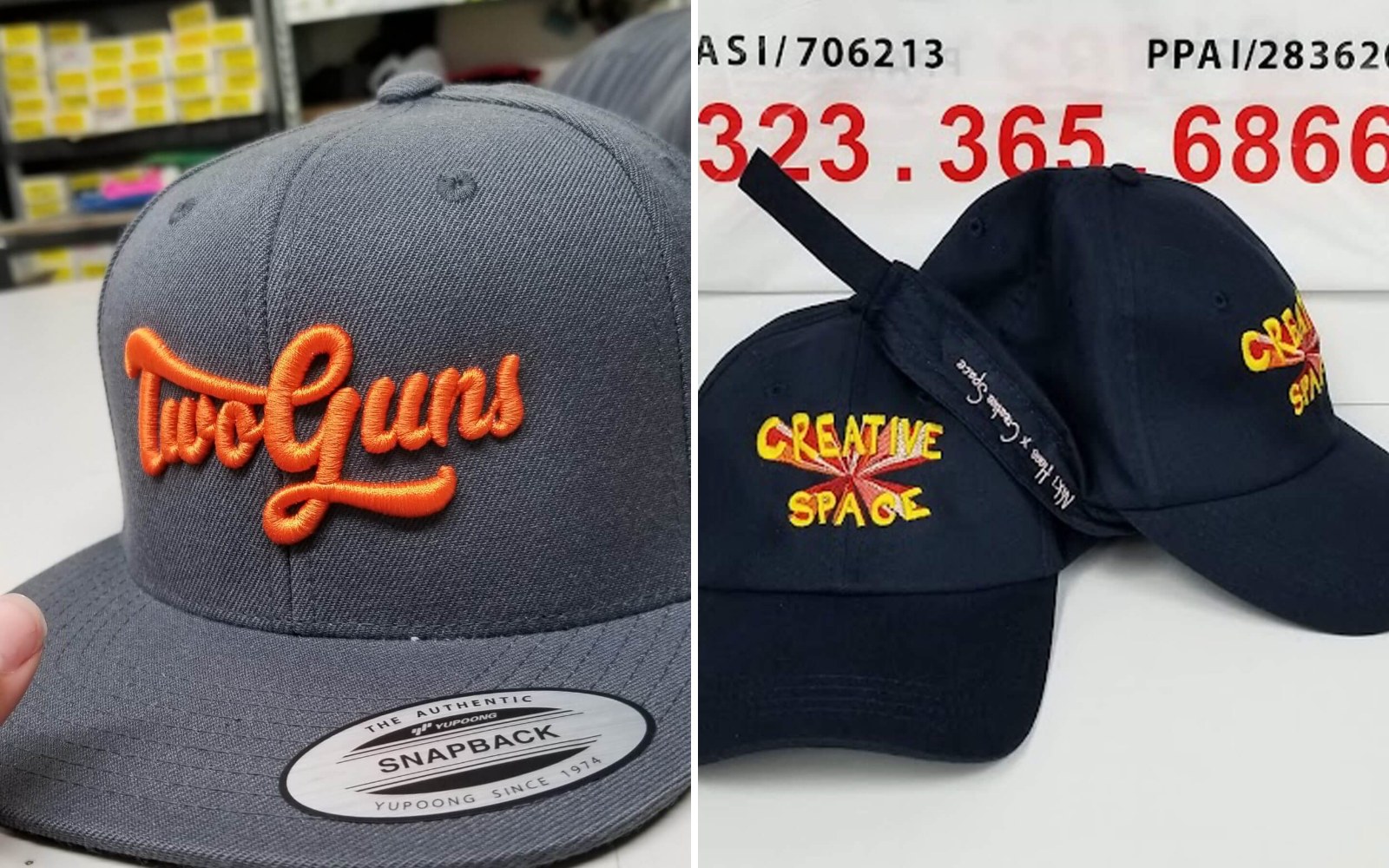
Hand embroidery is a relaxing craft and perfect for one-of-a-kind gifts, but it takes time, and every piece turns out a little different. Machine embroidery uses a digitized stitch file to reproduce the same design quickly and consistently, which is why businesses, teams and brands rely on it for uniforms, caps and merch. Machine embroidery also opens up options that are hard to do by hand, like raised 3D puff lettering on caps or the same logo on dozens of shirts. Curious what else is possible? Here are the items you can customize with embroidery, from apparel to bags and towels.
If you love a design you’ve stitched by hand and want it on a set of hats or shirts, custom embroidery from a professional shop can turn it into a stitch file and reproduce it on every piece. Weighing it against printing? Here’s when embroidery is the right choice.
Turn Your Sketches into Full-Color DTF Prints
Not every design needs to be stitched. If you’ve drawn or painted artwork you’d like to see on a tee, tote or hoodie, scan it at high resolution and have it printed on DTF gang sheets. DTF reproduces shading, watercolor washes and fine linework in full color, and there are no minimums, so you can print just one sheet of your designs. Our guide on how to apply DTF transfers shows how to press them with a heat press.
Beginner Embroidery FAQs
What’s the easiest embroidery stitch to learn?
The straight stitch and running stitch are the simplest, since each is just the needle passing up and down through the fabric. Once you’re comfortable, the backstitch is a natural next step.
How many strands of floss should I use?
Most floss has six strands. Two or three strands work well for fine lines and lettering, while all six create bold, textured stitches.
How do I transfer a design onto fabric?
Trace it with a water-soluble pen against a sunny window or light box, or print it on a wash-away stabilizer and stitch right through it.
How do I finish the back of my embroidery?
Weave your thread ends under a few stitches on the back instead of tying big knots. This keeps the back flat and stops the front from looking lumpy.
Can I wash hand-embroidered items?
Yes, gently. Hand wash in cool water with mild soap, roll the piece in a towel to remove excess water and let it dry flat.
Find out more about basic embroidery stitches and Screen Printing Services in California by getting in touch with the Ninja Stitch team. We hope to hear from you soon! Please feel free to share your ideas and suggestions in the comment section below.
Related reading: