
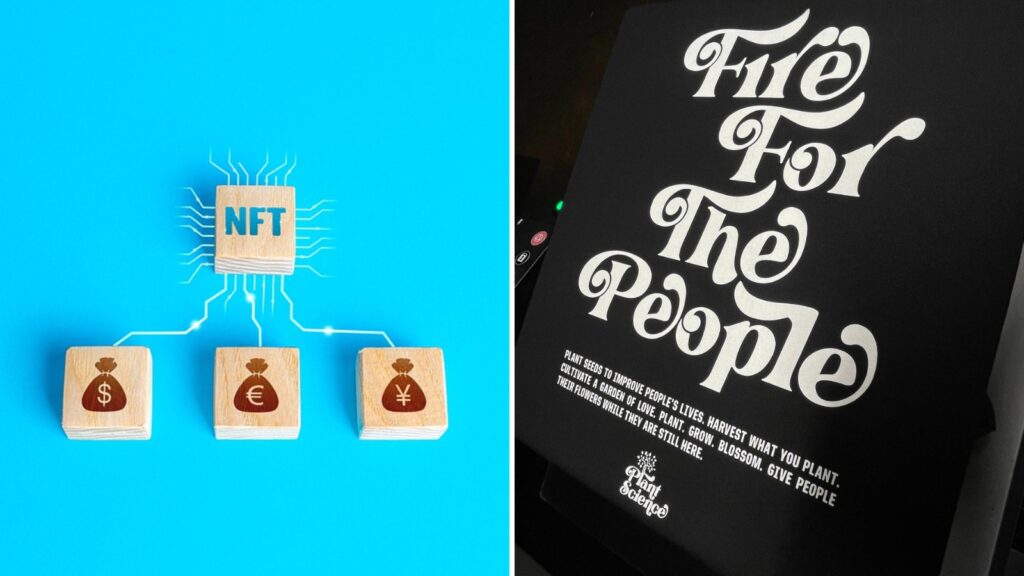

With the rise of non-fungible tokens (NFTs), it was only a matter of time until NFT shirts became a thing. And now, they’re here! NFT shirts are a fun way to personalize your wardrobe, allowing you to wear your favorite NFT artwork on your sleeve (literally). Not only are they a great way to show off your love for all things crypto, but NFT shirts also offer a unique and personal way to express yourself. Whether you’re rocking an Ethereum shirt or showing your support for your favorite NFT Project, there’s an NFT shirt out there for everyone. At Ninja Stitch, we can help you with your custom NFT shirts project. In this article, we share what NFT shirts are, why they’re popular and how to turn your own NFT art into a shirt.
Learn more about our process at Ninja Stitch.
What Are NFT Shirts?
NFT shirts are just what they sound like – t-shirts that feature artwork from non-fungible tokens. NFTs are a kind of digital asset that was popularized by CryptoKitties. Each NFT is a unique token recorded on a blockchain, and many collectors love showing off the artwork connected to the pieces they own on clothing and accessories. Additionally, NFTs can be easily transferred between users, making them ideal for use in a variety of applications.
Why Are NFT Shirts So Popular?
There are a number of reasons why NFT shirts have become so popular. For one, they offer a unique and personal way to express yourself. With NFT shirts, you can showcase your love for all things crypto, or show your support for your favorite NFT project. Additionally, NFTs are a great way to show off your tech savvy – after all, who doesn’t want to show off their knowledge of blockchain technology? Finally, NFT shirts are just plain fun. They offer a new and unique way to express yourself, and they’re perfect for showing off your love of all things crypto.
How to Turn Your NFT Art into a Shirt
Getting your NFT onto a shirt is simple when you start with the right file and the right permissions. Here’s how it works at Ninja Stitch:
- Confirm your rights: make sure you created the artwork or that your collection’s license allows you to print it (more on that below).
- Get the best file: download the highest-resolution original you can, ideally a PNG with a transparent background that’s at least 300 DPI at the size you want to print. Our graphic design team can help clean up a file that isn’t print-ready.
- Choose the garment and placement: a large back print shows off detailed art, while a smaller chest print suits a profile-picture-style NFT. Shirt color matters too: black tees make bright, neon art pop, while pastel or minimalist pieces often look best on white or heather shirts. Not sure which fabric to choose? Start with our tips on matching your fabric to the print method.
- Pick a print method: full-color methods like DTG and DTF handle detailed, colorful artwork best. Our guide to DTF vs. DTG vs. screen printing can help you decide.
- Approve your proof: you’ll see a digital proof of the placement and size before anything is printed.
Owning an NFT vs. Owning the Artwork
Buying an NFT gives you ownership of the token, but that doesn’t always include the right to reproduce the artwork. Many collections publish license terms that spell out whether holders can use the art on merchandise, and some limit it to personal use. Licenses vary widely: a few allow broad reuse, while others reserve all rights to the creator. Before you order, check your collection’s terms, and only print artwork you created, own or have permission to use. If you plan to sell your shirts, confirm that commercial use is allowed.
Print Your Collection with DTF
If you own several pieces, direct-to-film (DTF) printing lets you print them all at once. A gang sheet holds any mix of designs and sizes on one 23″ x 36″ sheet, printed in full color with a white layer so your art pops on dark shirts too. There are no minimums, and our guide on how to prepare a DTF gang sheet shows how to lay out your files.
No matter how you choose to create your NFT shirt, the important thing is that you have fun with it. NFT shirts are all about expressing yourself, so don’t be afraid to get creative! Want a textured, stitched version of your art? Learn how NFT designs translate into embroidery.
Caring for Your NFT Shirt
A little care keeps your printed artwork bright for years:
- Wash inside out in cold water on a gentle cycle.
- Skip the bleach and harsh detergents, which can dull colors over time.
- Hang dry or tumble dry on low to protect the print.
- Never iron directly on the design. If the shirt needs pressing, iron it inside out or place a cloth over the print.
NFT Shirt FAQs
Will the colors on my shirt match my NFT exactly?
Screens display color with light, while shirts are printed with ink, so some shades, especially neons, can look slightly different on fabric. Full-color methods like DTF and DTG get very close, and your proof helps you check the result before printing.
My NFT is pixel art. Will it print clearly?
Yes, as long as the file is enlarged correctly. Scale pixel art up using a nearest-neighbor setting so each pixel stays a crisp square instead of turning blurry.
Can you print an animated NFT?
A shirt can only show a still image, so choose the single frame that best represents your piece and send it as a high-resolution file.
Can I order just one NFT shirt?
Yes. DTF transfers have no minimums, so a single shirt for yourself or a small batch for friends is no problem.
At Ninja Stitch, we’re all about helping you express yourself through fashion. We offer a wide variety of custom t-shirt printing services, perfect for any occasion. Whether you’re looking for a one-of-a-kind gift or a way to show your love of all things crypto, we can help.
Contact our team about NFT shirt printing to get a quote for your design.
Related reading: